
Transformative Road to Education
Rizwana Paween
Primary School Teacher at Hajipura, Jhansi, Uttar Pradesh
NeTT Alumni, DIET Jhansi
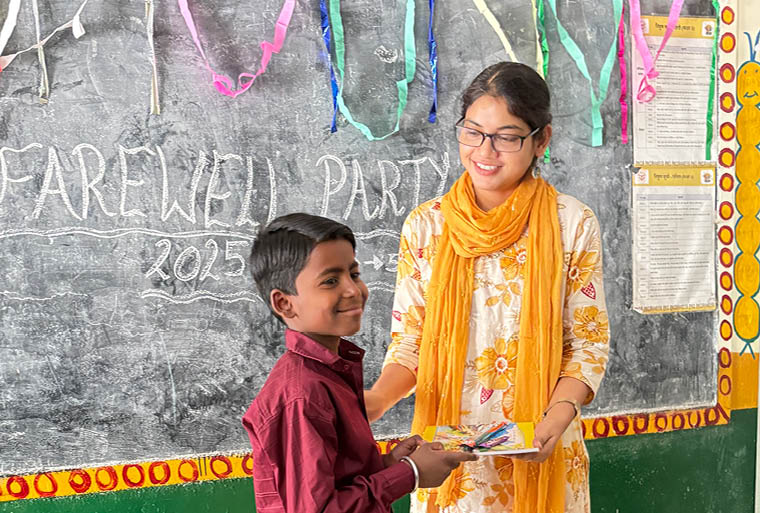
“I consider my students as my second family,” chirps Rizwana happily. Rizwana Paween is a teacher at Hajipura* Primary School in Baragaon block, Jhansi district, Uttar Pradesh, India. She teaches 26 students in grades one and two, out of a total of 69 students in the school. Posted there in March 2019, Rizwana has been teaching for nearly six years. Initially, she and the principal managed all the classes. Two years ago, a third teacher joined, easing the workload. Rizwana loves living in Jhansi, especially the local Bundelkhandi language and the region’s spirit of humanity and courage.
After Rizwana earned her bachelor’s degree, she was selected to do her Diploma in Elementary Education (D.El.Ed.) at the District Institute of Education and Training (DIET) in the small town of Baruasagar in Jhansi. It was during her time at DIET that she joined the Necessary Teacher Training (NeTT) Programme. Rizwana states, “the activities and training methods we experienced were truly mind-blowing.”
Rizwana narrates with nostalgia, “At NeTT Jhansi, we were a group of 150 students. We often worked in functional groups of six for various study tasks. We also engaged in debates and Common Meetings, discussing a wide range of topics—not just those from the syllabus. Every student had the chance to speak up for themselves, developing a personality that reflected both the realities of the world and strong moral and ethical principles. While exploring social issues, we became more aware of our surroundings and the challenges facing our society. It dawned upon us that a teacher is not only responsible for the students in their classroom but also plays an important role in benefiting the larger community around the school.”
Rizwana carried the warmth and values from her NeTT Jhansi training into her teaching practice at Hajipura Primary School. She prioritises giving students love, care, and support, creating a comfortable environment where they can express themselves freely. This mutual understanding helps make daily teaching and learning more effective and meaningful.
The Roadblocks
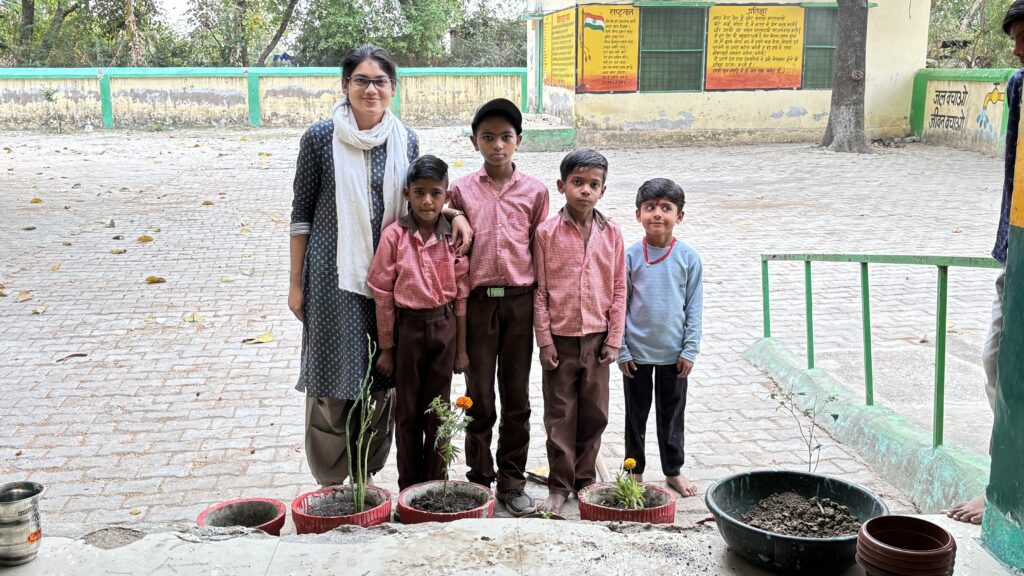
When Rizwana Paween first joined Hajipura Primary School, she was shocked by the extremely poor conditions. She explained: “The school had not been maintained for 20 years and lacked basic facilities like drinking water, working toilets, furniture, and a proper building structure. The roof leaked during rains, classrooms were flooded, and students sat on old mats. One classroom was filled with junk, and the damaged floors and broken windows allowed dangerous animals to enter. There were no toilets, no sweeper, and the school had no main gate, so animals roamed in and out freely. The road to the school was also in terrible condition, making daily access difficult. Another major issue at Hajipura Primary School was the frequent loss of electricity, as villagers often cut and rerouted the wires for personal use.”
Despite repeated repairs, the problems persisted, leaving students and teachers without fans in the heat. Many parents complained about the lack of basic amenities for their children. The only pleasant spot was a large banyan tree in the yard, where students and staff could sit and cool off. Rizwana hoped to create a sitting area around it for the students.
Stepping Stones for Change
Resolute in finding a solution, Rizwana began engaging with the village Pradhan**, a woman who also led nearby villages. Through regular visits—some accompanied by the school principal and others on her own—Rizwana shared the school’s problems, especially the lack of drinking water and toilets. Over 4–5 months, she persistently communicated the students’ struggles, eventually prompting the Pradhan to promise that she would do her best to solve the problems.
The village Pradhan kept her promise and took action to improve Hajipura Primary School. She coordinated with the village secretary and development officer to secure government funds, which were used for major renovations.
Rizwana was surprised, explaining “As I arrived on my motorbike on the first day of school after the summer vacation, I observed that the 200-meter road to the school was no longer the old muddy path. It was paved with cement slabs. As I came closer to the school, I could hardly believe my eyes. The whole school and its surroundings were being transformed!”
During the summer vacation of 2020, the school underwent a remarkable transformation: the muddy road was paved, a new main gate and school sign were installed, the schoolyard was levelled and cleaned, and a proper drainage system was built. Toilets were constructed, the roof and floors were repaired, tiles were laid, and a water system with a submersible pump and storage tank was installed. Furthermore, in November 2020, the school received 16 desks and benches donated by the nearby Heidelberg Cement Factory, which had also supported other local schools.
“I called and thanked Heidelberg Cement Factory for donating desks and benches to their school and invited them to visit,” Rizwana explains. A month later, the factory’s HR manager visited and initiated further support. The factory installed a hand pump in the village, raised the school boundary wall, repainted classrooms and walls, provided new windows with mosquito netting, and supplied a proper blackboard, whiteboards with markers, an LCD TV, and school bags with supplies for each student. Strengthened by the infrastructure improvement, Rizwana and the school staff organized support from villagers in regularly cleaning the school campus and the toilets.
Towards Quality Education
“Every day, I take some time out of my subject classes to talk to my students and give each of them a place to express whatever they want,” Rizwana said while explaining her teaching methods. She further explains, “When I teach the class, I always talk to the students about what they already know before introducing something new. Since their mother tongue is not the Hindi language (the language the curriculum is in) but the Bundelkhandi language, I use pictures to help them understand better. Teaching in a language different from a student’s mother tongue makes learning difficult, as it hinders understanding of complex concepts. The use of colouring books also supports the students’ learning. I try to inspire my students to be creative, so I have learnt to draw letters of the English alphabet and then transform them into animals. I have also adapted the Ludo game with the Hindi alphabets so that the students can learn while playing.”
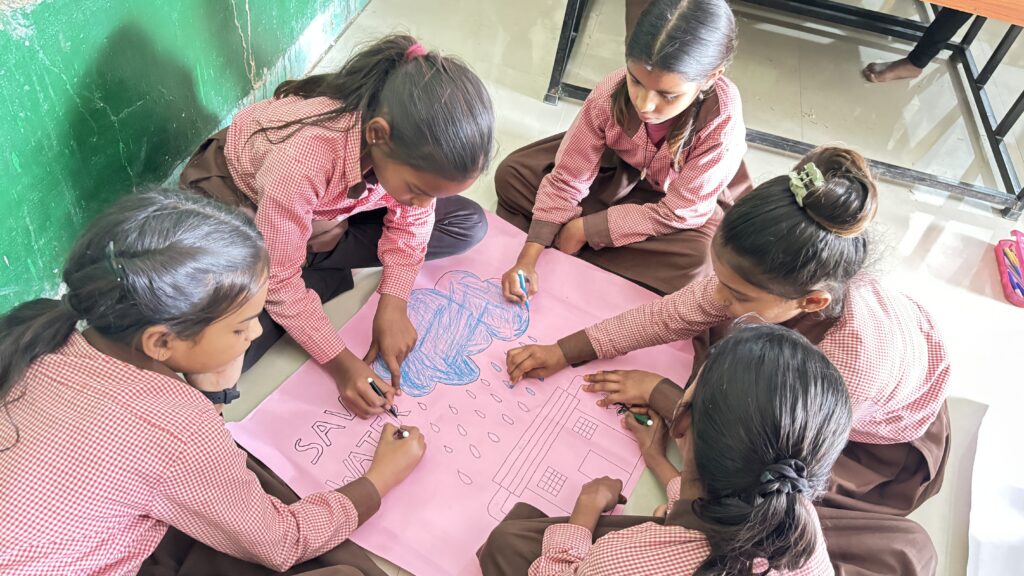
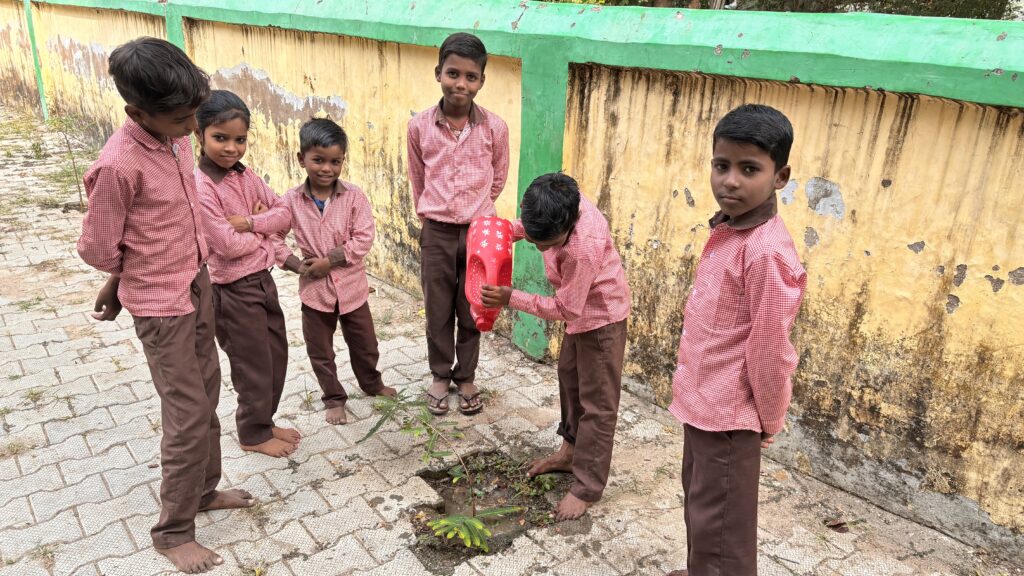
Rizwana integrates fun in teaching and learning and at times uses role plays to understand stories. “Sometimes, I am a friend to my students, enjoying myself and playing with them. At other times, I share inspiring stories on my tablet, which the students listen to through our Bluetooth speaker. Or I play music from my phone to engage them better,” explains Rizwana.
“To challenge the students and evaluate their progress, I give them surprise tests, and I always make sure to reward and appreciate their efforts. When I really want to make them feel special, I serve Maggi (bouillon) or make Kheer, an Indian dessert made of sweet milk pudding,” shares Rizwana.
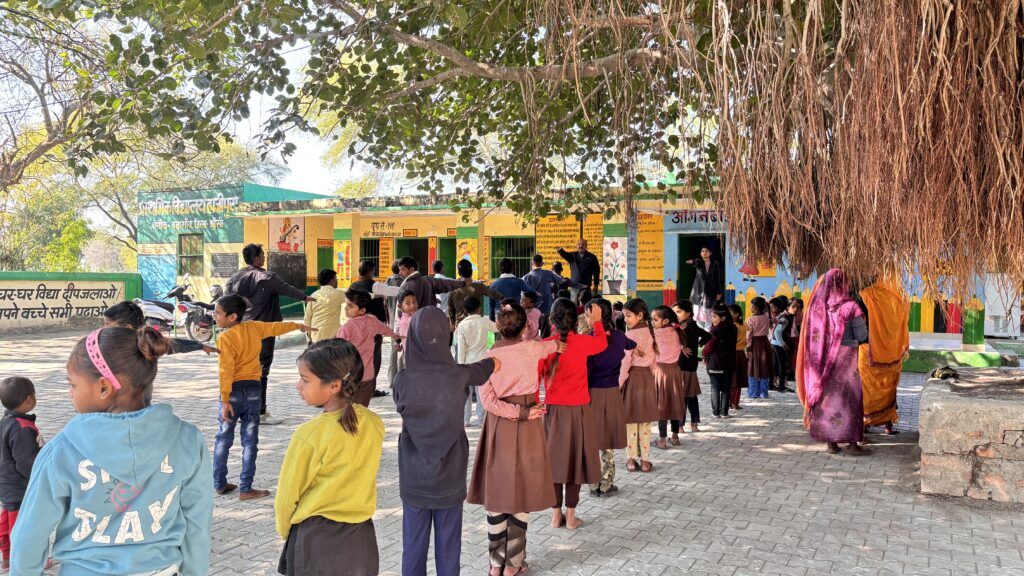
With improved basic facilities like clean toilets, drinking water, furniture, a smart TV, games, and a safe, clean environment, students now learn in a more comfortable and supportive setting. A friendly teaching method and approachable attitude has helped students become more expressive, confident, and emotionally connected. Over time, once-shy students have grown into attentive, thoughtful and talkative learners. Daily yoga, morning assemblies with positive messages, and a focus on oral learning methods support their development. Rizwana highlights, “Since the students’ mother tongue is Bundelkhandi, they are more active in numeracy than in literacy, so right now I am focusing on improving their literacy.”
Rizwana holds parent-teacher meetings on Saturdays when needed to discuss student issues and work together on solutions. As Rizwana explains, “To encourage parents, I share videos of their children’s progress.” Parents also support extracurricular activities, such as providing materials like mud for toy-making. Most importantly, parents contribute by helping with homework, preparing their children for school, and ensuring regular attendance, which supports the students’ overall growth and future.
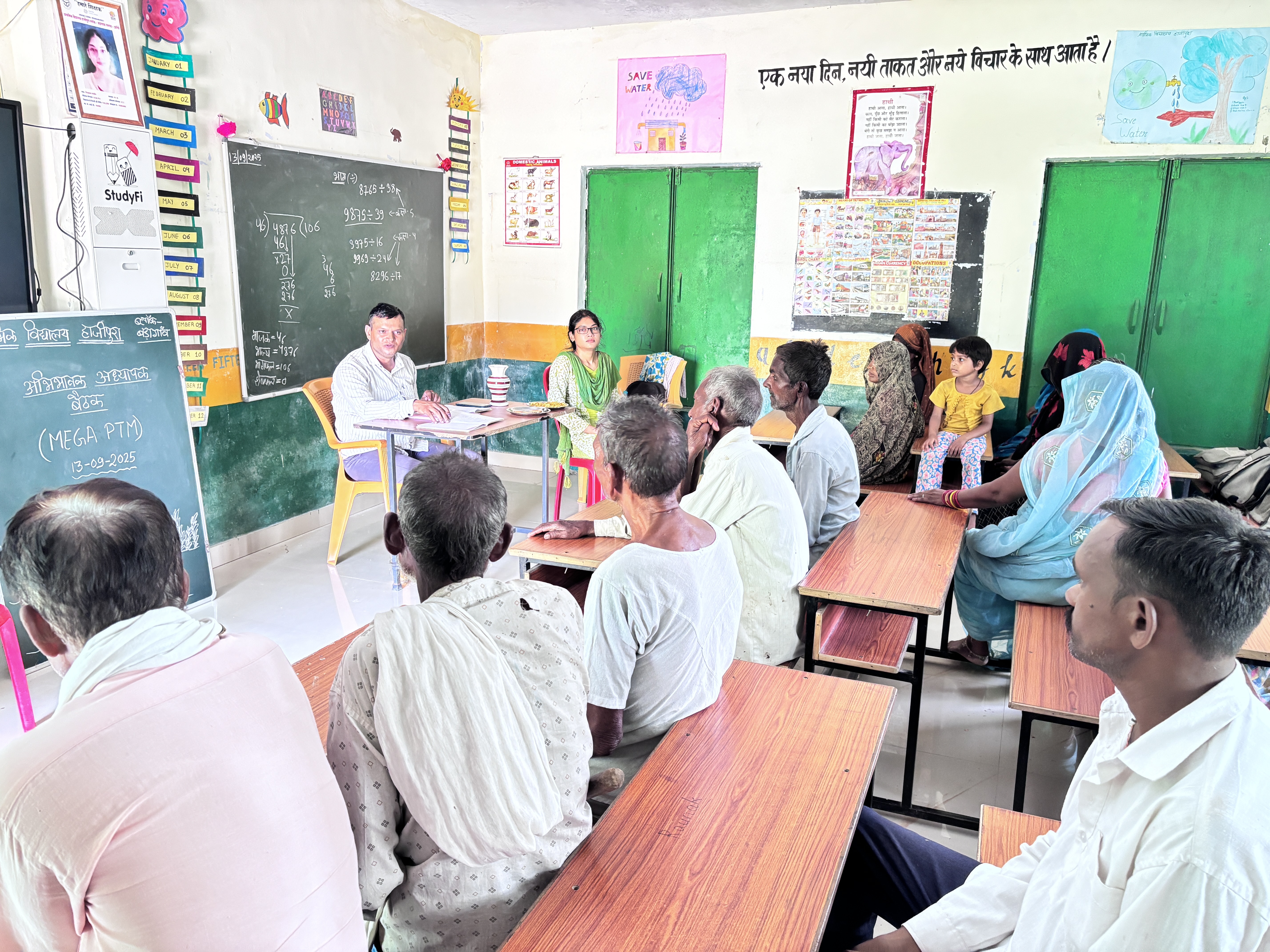
Rizwana concludes, “I strive to support students fully while encouraging them to help others and face challenges with courage. I am also learning and growing as an educator and as an individual. I believe education leads to personal growth and has a positive impact on both the individual and the community.”
* Hajipura village has a population of 544 according to the 2011 census of India.
** Pradhan is the elected head of a Gram Panchayat, the basic unit of local self-government in rural India.