A New Possibility for Ishaq
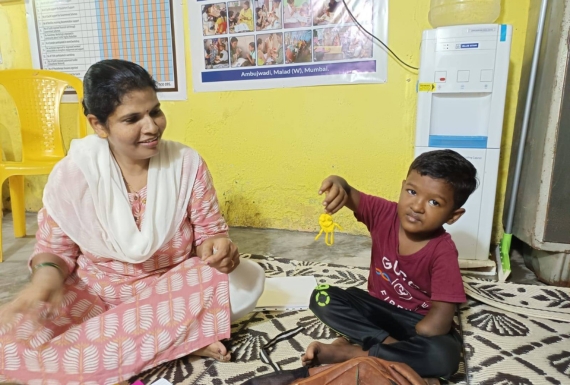
Ishaq Ansari is the youngest of three sons in the family of Ahmadi Nizamuddin Ansari, who has been living in Ambujwadi, Mumbai, since 2008. The family of seven, including two daughters, depends primarily on the income earned by Ishaq’s father, who sells toys on the streets and makes approximately ₹300–400 a day. With an uncertain daily income, meeting the household’s basic needs is already a challenge for the family.
Born with a congenital condition affecting his left hand, Ishaq’s early years brought additional concerns for his parents. Determined to ensure that her son could enjoy a childhood with opportunities like other children, his mother spent years visiting different healthcare facilities and consulting doctors. However, the initial medical opinions offered little hope of improvement.
After several consultations, the family finally received a possible solution. A specialist suggested that a prosthetic hand could significantly improve Ishaq’s ability to perform everyday activities and enhance his quality of life. But the cost of treatment presented another major obstacle. Leading hospitals quoted approximately ₹3,50,000 for the prosthetic fitting and associated treatment.
For a family dependent on the modest and unpredictable earnings of a street vendor, arranging such a substantial amount was beyond reach. Despite their efforts, the family could not afford the treatment and gradually lost hope of finding a solution for Ishaq.
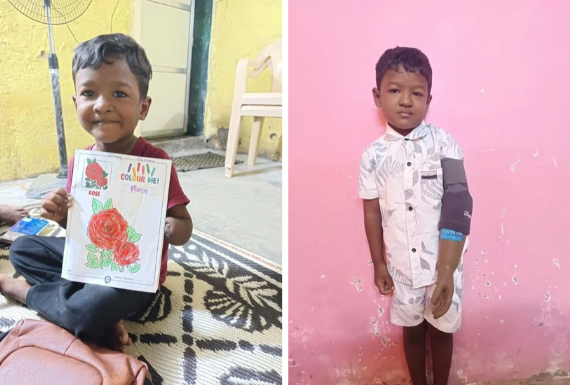
A new possibility emerged during a door-to-door community survey conducted by the Humana People to People India (HPPI) team. While interacting with families in Ambujwadi, a field worker identified Ishaq, understood his condition and registered him under the Children with Special Needs (CwSN) initiative. This brought the family in contact with support that they had been unable to access on their own.
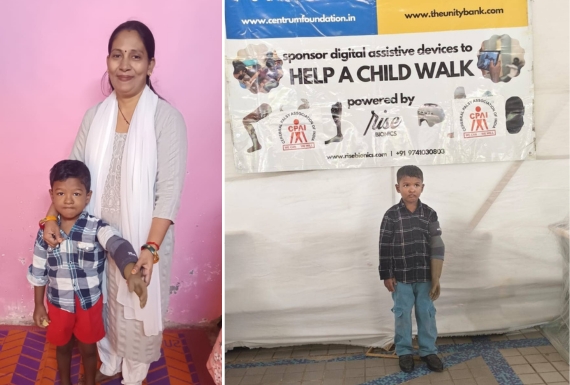
With support from Centrum Foundation, the process of arranging a customised prosthetic hand for Ishaq moved forward. On 2 September 2026, the project team accompanied Ishaq and his mother from Ambujwadi to a specialised centre in Santacruz for medical assessment and measurements required to develop a customised prosthetic hand. The assessment marked an important step towards making the treatment possible.
On 7 October 2026, Ishaq received his custom-fitted prosthetic hand. For his parents, this was a moment of immense happiness after years of uncertainty and unsuccessful attempts to find appropriate medical support. His father shares, “We always wanted Ishaq to have the same opportunities as other children. We could never afford such expensive treatment on our own. We are grateful that he has received this support and now has a chance to do more independently.”
His mother adds, “I had visited many doctors and hospitals hoping to find a solution for my son. There were times when I felt helpless. Seeing Ishaq receive his prosthetic hand has brought us new hope. I want him to grow up with confidence and never feel limited by his condition.”
Ishaq’s journey highlights how community-based identification and timely intervention can connect children with special needs to essential services. Through its CwSN initiative, Humana People to People India is working to reach children who may otherwise remain excluded from specialised care and support, helping them move towards greater inclusion, dignity and opportunities.