Cooperatives Build a Better World
Project Sashakt Driving Inclusive Growth through Capacity-building Training for Women Artisans from Handloom Cooperatives in Assam
India’s cooperative movement, deeply rooted in its cultural and socio-economic landscape, has evolved into a powerful vehicle for inclusive growth, community empowerment, and rural development. Cooperative is an autonomous association of persons who voluntarily cooperate for their mutual, social, economic, and cultural benefit through a mutually owned and democratically run enterprise. Based on values like self-help, democracy, equality, equity and solidarity, cooperatives are particularly useful in empowering women through membership.
Yet, women’s cooperatives comprise only about 2.5% of all cooperatives in India, and a significant portion of these are dormant. An unusually high number of dormant women’s cooperatives demonstrates that women face barriers in maintaining and sustaining them. Most women’s cooperatives are small, have limited resources. Women members have limited access to education, skills training and financial literacy. They are also restricted by cultural norms like the burden of unpaid work and limited mobility, particularly in rural areas.
The year 2025 has been designated the International Year of Cooperatives (IYC) by the United Nations to highlight the role of cooperatives in achieving sustainable development and the Sustainable Development Goals (SDGs). The theme for IYC 2025 is “Cooperatives Build a Better World”.
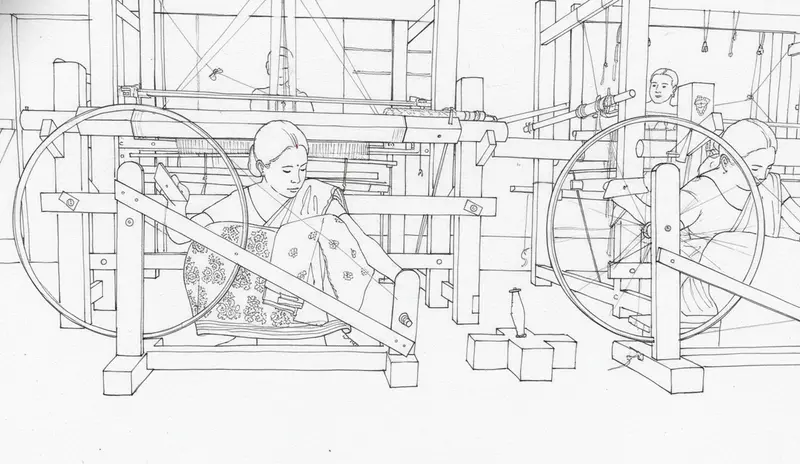
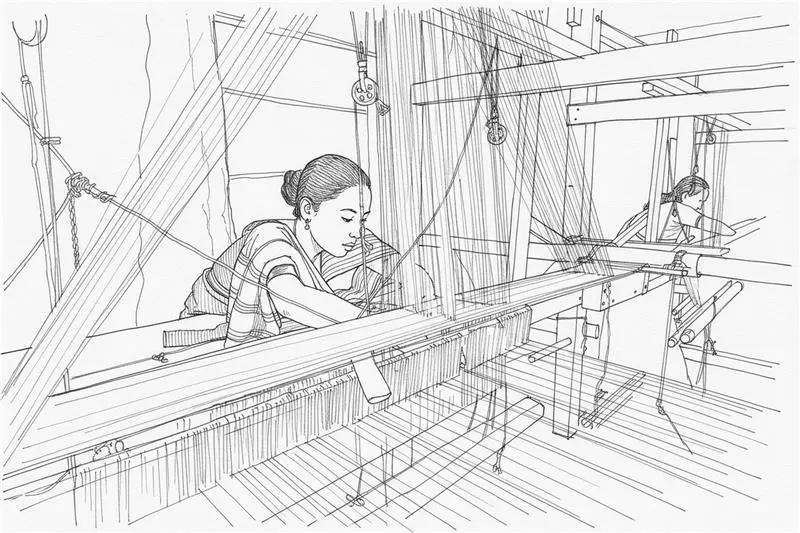
HPPI shares this vision, building on its experience of working with over 10,000 women in Assam to promote economic security and entrepreneurship. Project Sashakt aims to strengthen technical and management capacity of handloom cooperatives and women weavers working in Dhubri, Chirang and Kamrup districts of Assam through skill upgradation, credit and market linkages. Through this Project, HPPI is supporting 2,500 women weavers for three years in providing business development services to improve their income and boost handloom products in national and international markets.
Capacity Building of Women Artisans
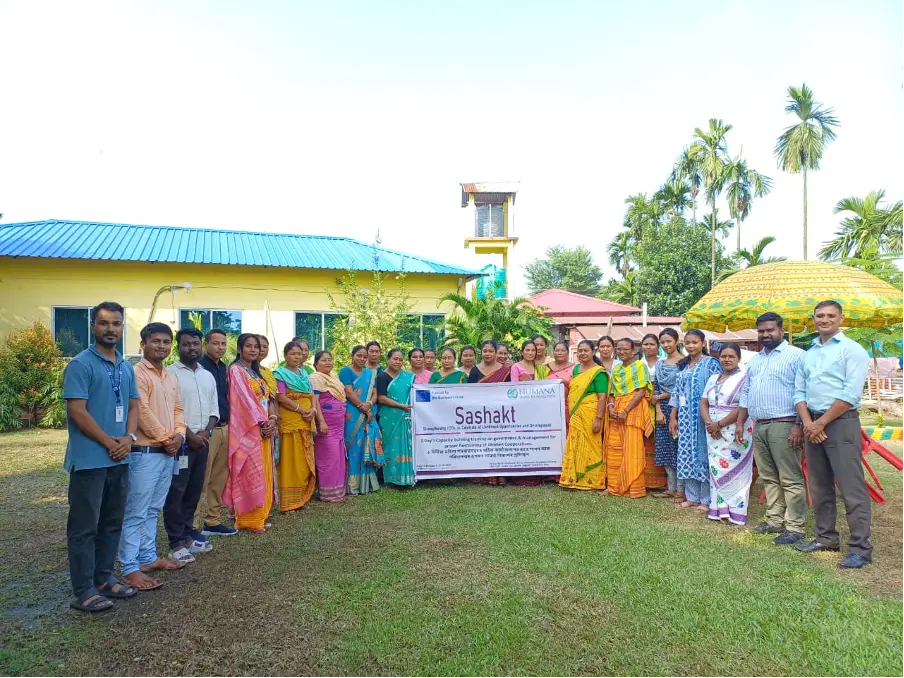
As part of its many interventions, Project Sashakt organised a five-day capacity-building training session on Governance and Management in Cooperatives in Kajalgaon, Chirang, from 7–11 October 2025. The training focused on strengthening women-led cooperatives and individual entrepreneurs engaged in Assam’s vibrant handloom and allied sectors.
Using an engaging, experiential learning approach, the sessions aimed to build knowledge and practical skills in cooperative governance, financial literacy, business development, and community advocacy. By the end of the week, participants were equipped with tools and strategies to drive sustainable organisational growth and create meaningful community impact.
Objectives of the Training
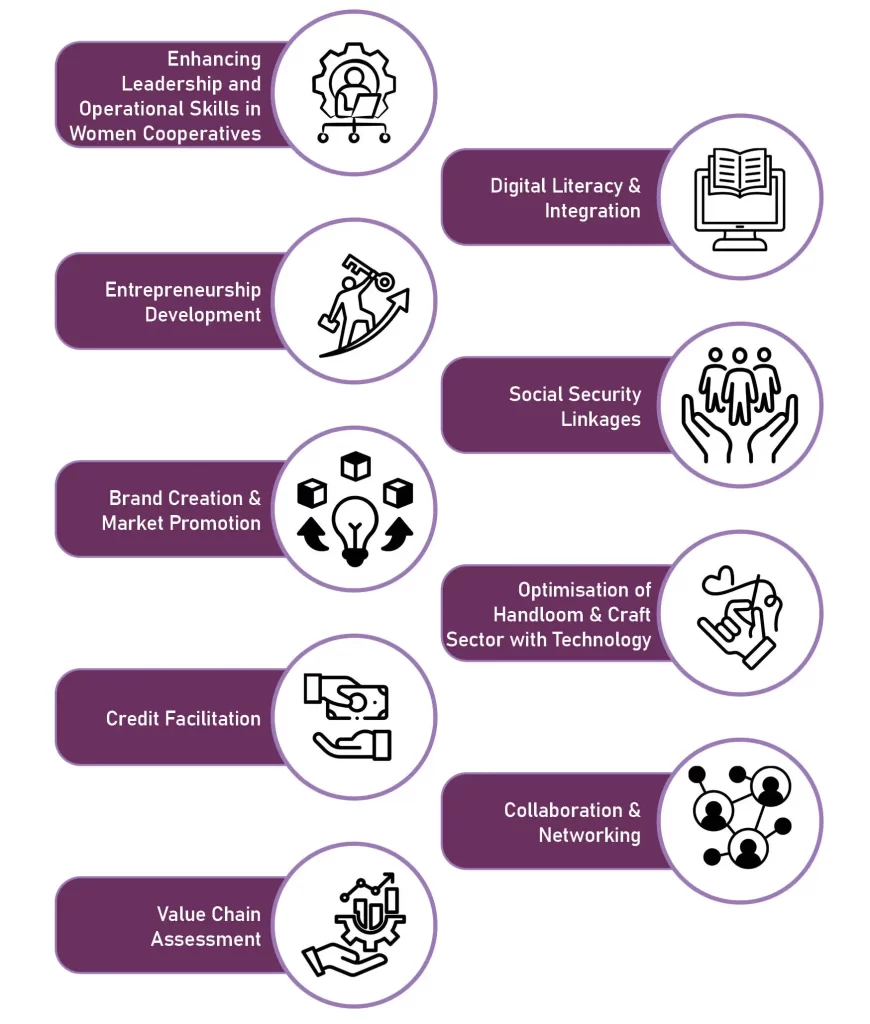
The session was designed to strengthen leadership, governance, and accountability within cooperatives, fostering a culture of transparency and effective decision-making. It sought to clarify cooperative structures by clearly distinguishing between governance and management functions, ensuring that roles and responsibilities are well defined and properly executed.
A key component of the session focused on enhancing financial planning, budgeting, and reporting capabilities to support sound financial management and long-term sustainability. Participants were also guided in developing Standard Operating Procedures (SOPs), business plans, and market linkage strategies to improve operational efficiency and strengthen access to markets.
In addition, the session promoted digital branding, legal literacy, and advocacy skills to empower cooperatives to enhance their visibility, ensure compliance with regulatory frameworks, and actively engage in community-driven development initiatives.
Training Methodology
To ensure that learning was hands-on and participatory, the sessions incorporated a range of interactive methods and practical exercises. Participants engaged in case studies and group discussions that encouraged critical thinking and the sharing of real-world experiences. Role-play and simulation activities were used to strengthen problem-solving and decision-making skills in a cooperative context.
The sessions also featured practical exercises in budgeting and the drafting of Standard Operating Procedures (SOPs), enabling participants to apply financial and operational concepts in a realistic setting. Peer learning and mentorship opportunities were integrated to facilitate knowledge exchange and build supportive professional networks. In addition, strategic games and planning activities were conducted to enhance teamwork, strategic thinking, and long-term planning capabilities among participants.
Key Highlights from the Training Active Participation of Women Artisans
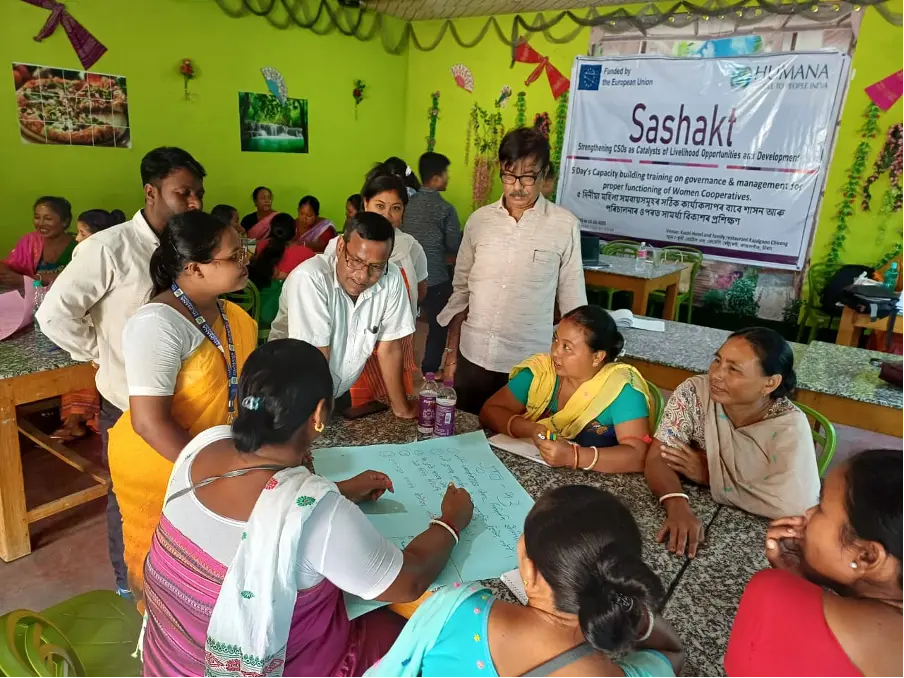
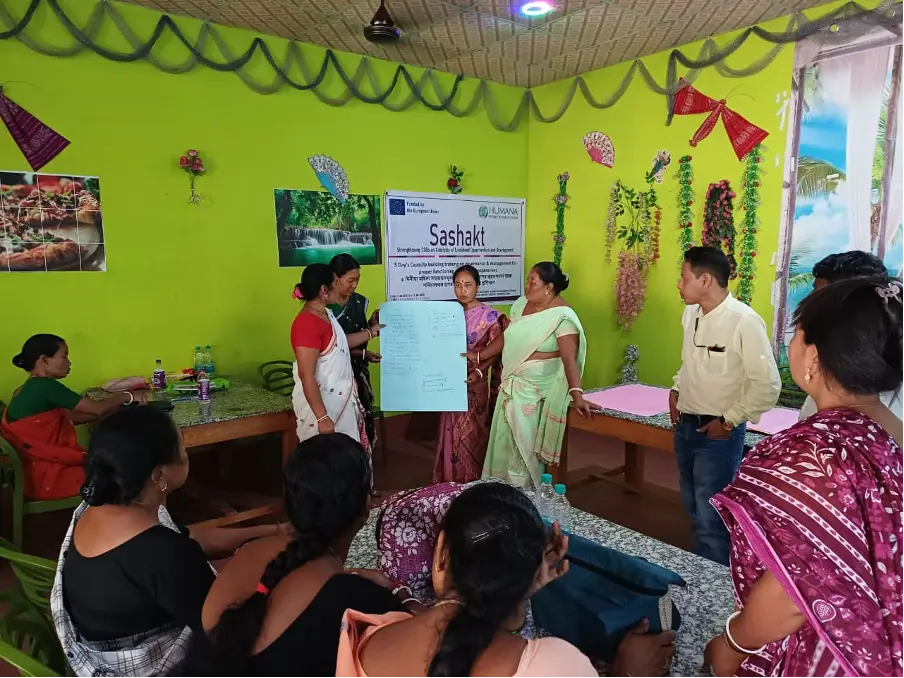
More than twenty participants from eight cooperatives took part in the session with great enthusiasm, sharing their lived experiences and real-world challenges. Their active involvement enriched the discussions and ensured that the learning process remained practical and grounded in reality.
“Governance in Action” Activity
During this exercise, participants identified key governance gaps such as limited transparency and low member engagement. They worked collaboratively to design inclusive and accountable solutions aimed at strengthening governance within their cooperatives.
Hands-on Budgeting and Financial Planning
Women leaders practiced preparing monthly budgets and explored the use of internal financial controls. These exercises helped build their confidence and enhanced their capacity to make informed financial decisions.
Drafting Standard Operating Procedures (SOPs) and Business Plans
Each cooperative began developing tailored Standard Operating Procedures (SOPs) and business plans aligned with their long-term strategic goals. This activity enabled participants to translate concepts into concrete, actionable plans.
Role-Play on Membership Recruitment
Through role-play simulations, participants refined their approaches to member onboarding and engagement. The exercise encouraged them to adopt more inclusive recruitment strategies that strengthen cooperative participation.
Interactive Game — “The Weaving Web”
This creative and interactive game inspired participants to think innovatively about cooperative-based enterprises. It encouraged brainstorming on ways to diversify income streams and expand economic opportunities.
Leadership and Team Dynamics Game
An engaging leadership game provided valuable insights into coordination, responsiveness and teamwork. Participants gained a deeper understanding of how effective team dynamics contribute to successful cooperative management.
Legal Literacy and Compliance
Participants explored key topics such as cooperative registration, labour rights, and contract management through scenario-based learning. The session strengthened their legal awareness and understanding of compliance requirements.
Marketing and Advocacy Strategies
In group activities, participants developed digital branding strategies and crafted advocacy messages to promote their products and highlight their cooperative identity more effectively.
Monitoring and Evaluation Frameworks
Each cooperative drafted a basic monitoring and evaluation (M&E) framework to track progress and measure social impact. This exercise emphasised the importance of accountability and continuous improvement in cooperative operations.
Conclusion
With the establishment of the Ministry of Cooperation in 2021 and its recent initiatives, the Government of India has reaffirmed its commitment to promoting a cooperative-driven development model that reaches every corner of the country.
We believe that women’s cooperatives have the potential to transform rural economies and to empower women. Project Sashakt’s five-day training equipped women cooperative members with practical tools, strategic insights, and renewed confidence to lead their organisations.
The participatory approach fostered ownership, collaboration, and a strong sense of purpose among participants. Initiatives like these, can pave the way forward in strengthening Assam’s handloom sector—driving sustainable cooperative development and economic empowerment for women.