
Returning to the Roots: Vinod Kumar’s Journey Towards Chemical-Free Farming
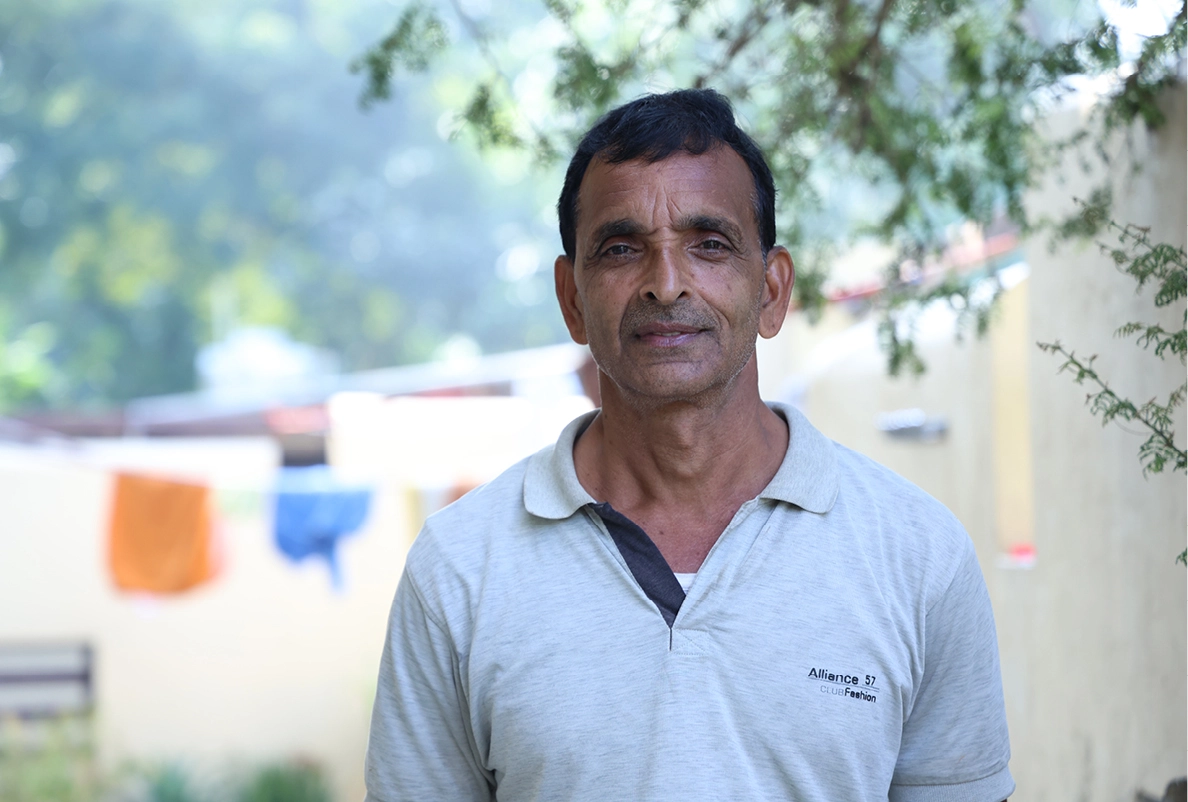
Vinod Kumar, a farmer from Sewaith village in Soraon block, Prayagraj comes from a traditional farming family where agriculture has been the backbone of life for generations. For years, like most farmers in the region, his fields depended heavily on chemical fertilisers to sustain wheat and paddy cultivation. Rising input costs, declining soil health, and concerns about food quality were accepted as unavoidable realities—until change arrived through the Holistic Rural Development Project, implemented by Humana People to People India in partnership with HDFC Bank Parivartan, a CSR initiative.
The project aims to transform 15 villages into model villages, ensuring improved access to quality healthcare, better education, enhanced livelihoods, climate-smart agriculture, and sustainable natural resource management. Through a multi-pronged approach, the project seeks to improve the quality of life of rural communities. A key focus is supporting 1,500 small and marginalised farmers to increase income and food security through sustainable agriculture and ICT-based farm solutions, promote chemical-free farming across 3,000 acres, and bring 300 acres of unirrigated land under climate-smart irrigation.
As part of the intervention, 60 farmers’ groups were formed across 15 villages, engaging 1,580 farmers. Vinod became an active member of one such farmers’ group in his village. Through regular meetings, demonstrations, and hands-on training, farmers were introduced to climate-smart and natural farming practices aimed at reducing dependency on chemicals and lowering cultivation costs.
Reflecting on this transition, Vinod says, “Now we are using organic fertilisers, and it has been almost two years since we made the shift.” He credits the project’s training sessions and expert guidance for this shift. “Since the project came and gave us training, we stopped using chemical fertilisers. Now everything is growing well.”
One of the most visible changes Vinod observed was in his soil. “When we started using organic fertilisers, the soil became soft and smooth,” he explains. Addressing a common fear among farmers that yields may decline initially, he adds confidently, “People say production decreases, but that is not true. Once you start organic farming, slowly everything becomes normal and production continues to grow.”
Through the project, 400 farmers received hands-on training in vermicomposting using Rhino vermi-beds. Vinod set up his own vermicompost unit and actively manages dung collection and compost preparation. “Manure gets ready in about 40–45 days,” he says. “From one bed, I get around 300 kilos in one go. This is the third time I have taken manure from my unit.”
Vinod owns 3.4 acres of land, and while his vermicompost does not fully meet his requirements, he supplements it by purchasing organic manure from other farmers in the village—strengthening local cooperation and livelihoods.
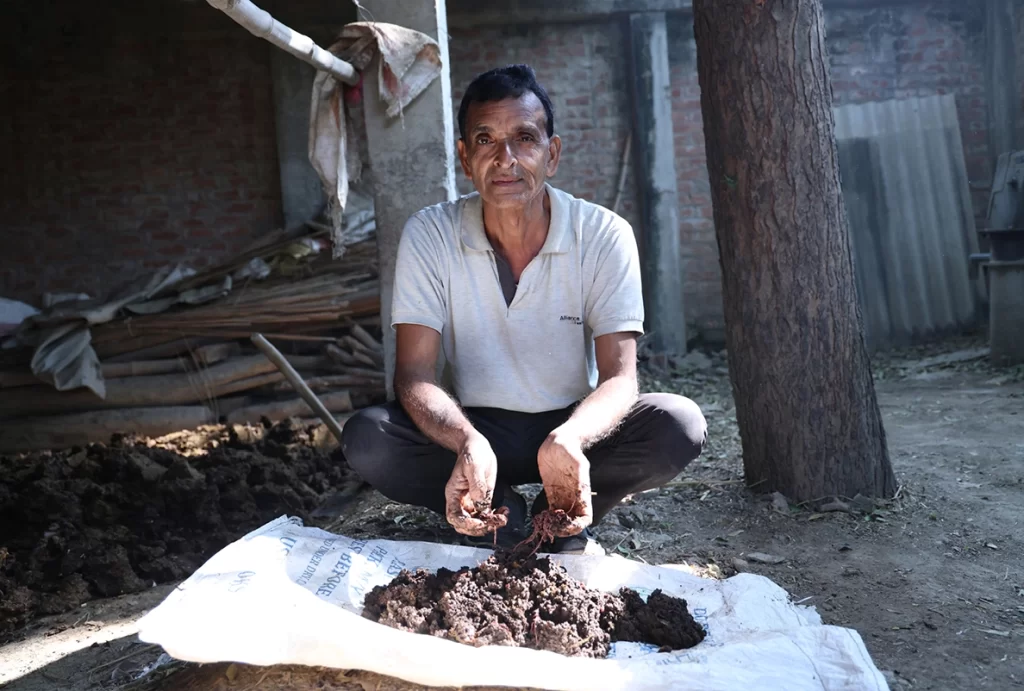
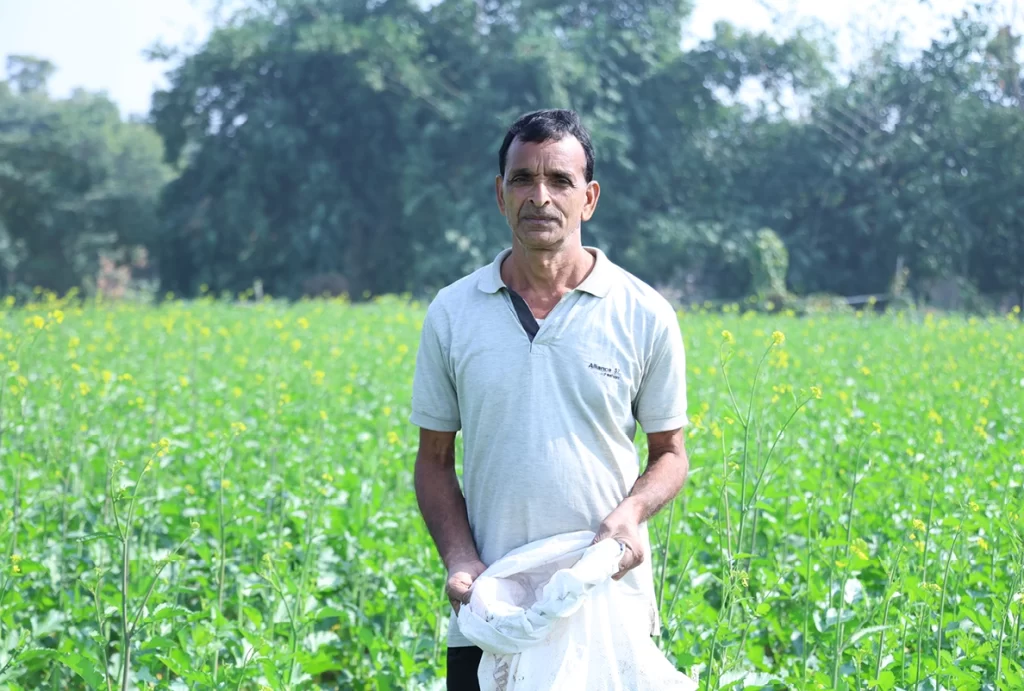
Today, his fields grow wheat, paddy, and seasonal vegetables using organic inputs such as cow dung manure and bio-inputs promoted through the project. “Earlier, when we used pesticides, the food smelled like medicine,” Vinod recalls. “Now, organically grown food has sweetness and taste. It is like Ayurvedic medicine—it works slowly but has no side effects.”
From one acre of wheat, Vinod now harvests 15–16 quintals, comparable to or better than earlier yields, while significantly reducing input costs. Part of the produce is sold to meet household expenses, and the rest is consumed by the family. He also notes growing market opportunities: “Even people who are shifting towards organic farming now have mandis to sell organic food.”
Vinod’s story reflects the broader impact of the Holistic Rural Development Project—reviving traditional wisdom with modern, climate-smart practices. His journey from chemical dependency to organic confidence not only improved his soil and crops but also restored his faith in sustainable farming. As Vinod puts it simply, “Organic farming gives healthy soil, tasty food, and peace of mind—for us and for the next generation.”