Ahimsa Silk
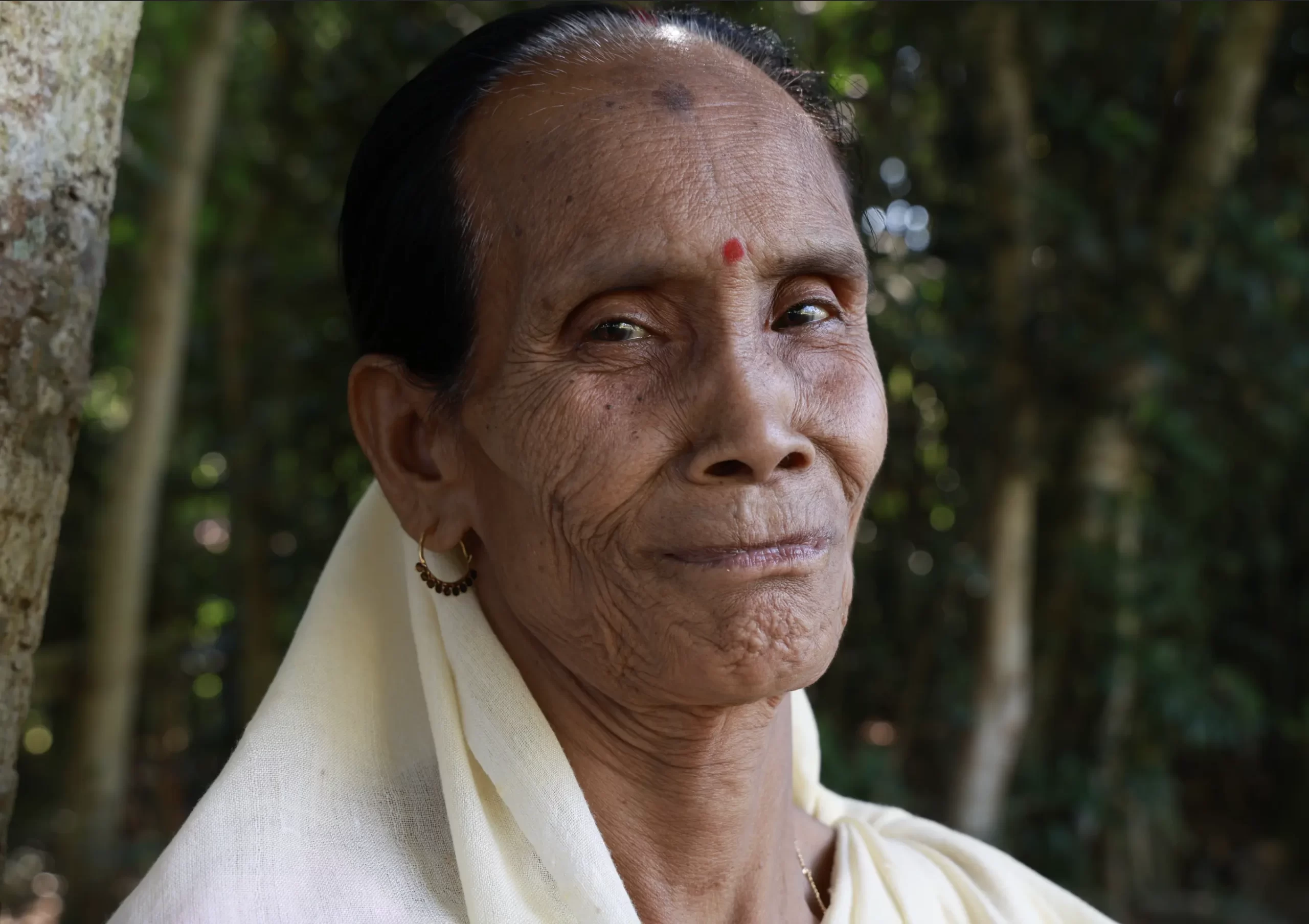
“You know, I had my maiden trip to Delhi recently to be a part of a national Hathkargha event where I met the Prime Minister of the country,” Lakhimai tells proudly. The fifty-nine-year-old adds, “I used an electric elevator to go up and down for the first time!”
Agriculture is the mainstay of this Urungial village. But it is a seasonal livelihood. People need other sources of running income in the lean season of paddy production. Lakhimai, like most in Assamese households, could work on a loom, but didn’t know how to earn income from weaving.
Never to miss an opportunity, Lakhimai decided to get the three-day Entrepreneurship Development Training from Project Disha as soon as she heard about the opportunity. During this training she learnt about the idea of doing Eri silk business. Soon after, Lakhimai took a training from Central Silk Board and started making Eri silk and its products. Now Lakhimai Lohan is a sericulturist. She has been making Eri silk, its handloom products and also selling silk worms to others for five-six months now, and is able to make Rs 15,000 per month. She sells locally and through North Eastern Development Finance Corporation Ltd (NEDFi).
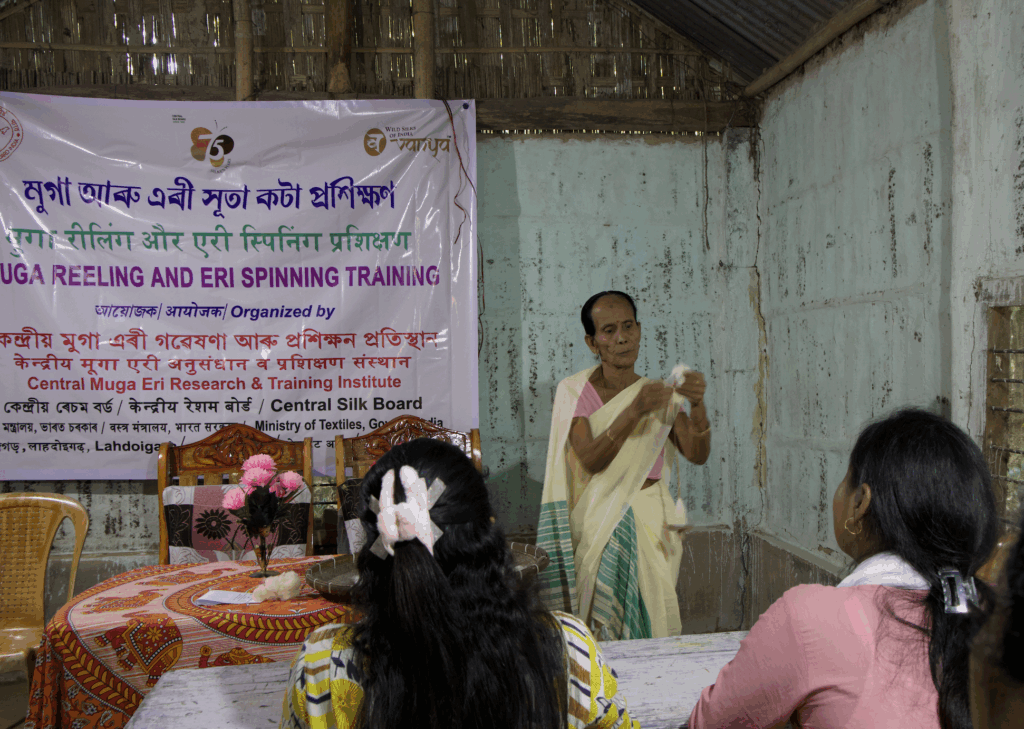
Seeing her drive and the quality of her products, Lakhimai was hired as a trainer by the Central Silk Board. She trains women from the farming community so that they can learn another skill and earn a living. She states, “I am a trainer too with the Silk Board and have trained twelve groups (each group has thirty trainees). Working with Eri silk and training is turning out to be profitable for me, and I wish to share my prosperity with others in the farming community.”
Eri silk is renowned as the world’s only vegan silk, where, unlike other silks, the moth inside the cocoon is not killed. Instead, the moth naturally exits the cocoon, leaving it behind for us to use. This ethical and eco- friendly process sets Eri silk apart, making it a symbol of compassion and sustainability in the textile industry. Having a Geographical Indication (GI) tag helps Eri silk establish a strong international presence and its recent prestigious Oeko-Tex certification by Germany further cements Eri silk’s status as an eco-friendly fabric.
According to Lakhimai, “I displayed my work at the Project-organised Skill Fair in Jorhat and I got some orders and made contacts.
I observed others and I also learnt about how to present and enhance my products.” Adding to her silk products’ sustainability, Lakhimai uses natural colours to dye the yarn she weaves. With her work she also employs other women to weave the Eri silk thread into fabric and finished products.
“With the help of the Disha Project, I have received an Artisan card from the Ministry of Textiles and it can help me grow my business,” Lakhimai adds. Artisan cards help artisans access financial assistance, insurance and other government programmes.
“I am happy to that my business has a positive impact. I am able to make a profit while also benefiting the society and the environment,” concludes Lakhimai.