Women Health Groups: Creating Participatory Spaces in Slums
Beena, a community mobiliser with Humana People to People India (HPPI), walks through the narrow alleys of the slum in Chakkarpur, Gurugram. The cramped lanes carry the acrid smell of tadka, while families of several members share spaces barely large enough for one person. Amid the everyday bustle, women go about their household chores and children move through the lanes.
Beena stops to speak with residents, asks children about their absence from the tuition centres, and encourages them to return the next day in a voice that is both stern and kind. But one of her most important responsibilities today is to reach out to the women in the community and encourage them to set aside some time from their routines to attend the monthly meeting of the Women’s Health Clubs (WHCs).
Most families living in these slum settlements are migrants who came in search of better livelihood opportunities and education opportunities for their children. However, the living conditions in the settlements often make access to basic health services, hygiene, and a safe living environment difficult. Residents also report relying on unqualified practitioners, commonly known as quack doctors, for their healthcare needs.
The Community Development Project (CDP), Chakkarpur, works to support urban migrant families through interventions in health, education, and skills development.
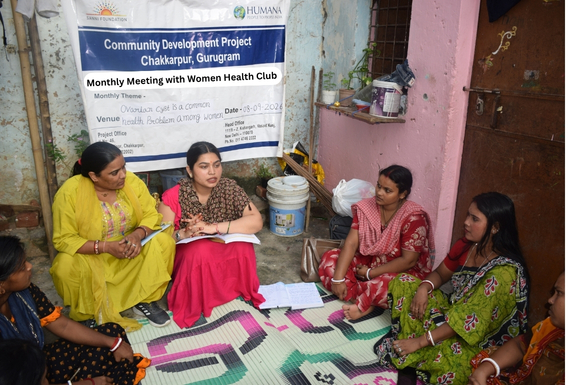
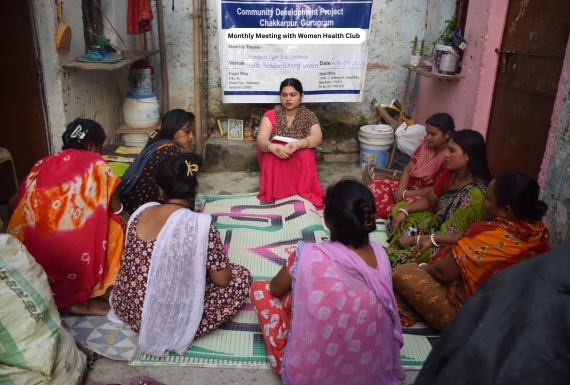
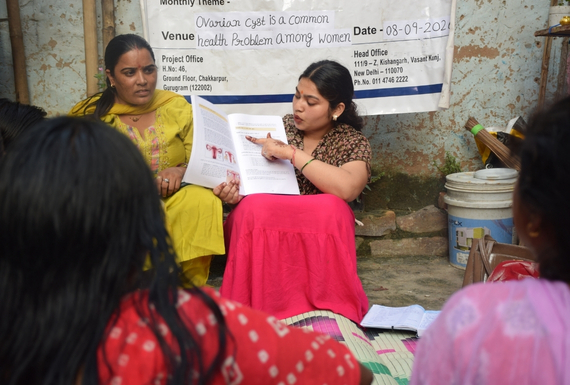
According to Beena who has worked with HPPI for almost eight years, the Women’s Health Club is HPPI’s initiative to build a healthy and meaningful support community for the women. It creates awareness about hygiene, communicable and non-communicable diseases that leave these families vulnerable, as well as provides the women a participatory space to discuss these challenges and other general issues they face. The discussions follow different health themes each month. This month, following the same pattern, the women discussed menstrual health, Polycystic Ovary Syndrome (PCOD) and ovarian cysts.
For Beena, the subject was particularly personal. She shared at the very beginning of the session that she herself lives with PCOD. Her openness helped create a sense of comfort and trust among the women, making it easier for them to speak about a topic that is often considered too personal to discuss openly.
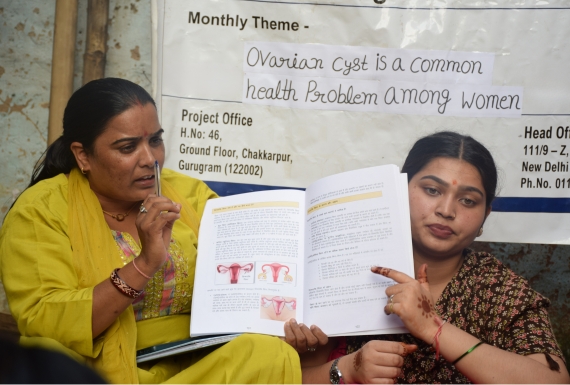
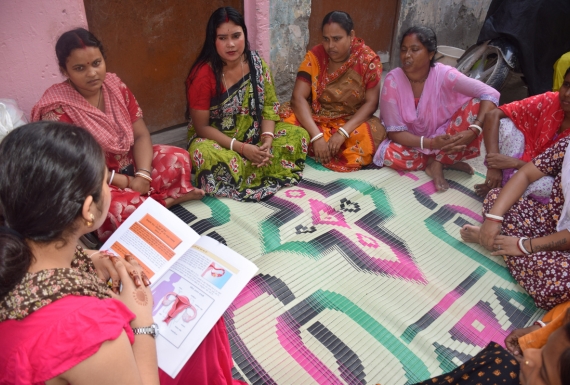
Using illustrated heath club manuals, the community mobilisers explained the menstrual cycle, common symptoms, and the difference between PCOD and ovarian cysts. As the conversation progressed, three to four women recognised that they, too, had experienced symptoms associated with these conditions. The discussion also helped dispel unnecessary fears by clarifying the difference between menstrual irregularities and natural changes associated with menopause.
Drawing from her own experience, Beena spoke about lifestyle and dietary practices that can support women’s well-being, along with simple physical activities that can be incorporated into their busy daily routines. What began as a health-awareness session became an open conversation in which women could ask questions, share experiences, and learn from one another.
Sampa, a member of the Vani Das Women’s Health Club, has been attending these meetings for the past two years. She finds the sessions valuable because they provide practical knowledge on health, hygiene, and healthy lifestyle practices that she can apply to herself and her family.
“These meetings give us information that we may not otherwise have access to. I encourage every woman in our area to join and learn how to prevent health problems,” says Sampa.
A key strength of HPPI’s Urban Community Development Projects is that the community mobilisers belong to the same community with whom they work together. Beena, too, feels deeply connected to the community she works with. Her role allows her to engage with families, connect with newly arrived migrants, encourage women to prioritise their health, and support children’s education.
Over the years, seeing women like Sampa gain knowledge and confidence through these initiatives has strengthened Beena’s own commitment to the work. For her, community development is not simply about delivering information, it is about building trust, creating spaces where people can participate, and supporting communities to take meaningful steps towards healthier and more empowered lives.
The Community Development Project (CDP), Chakkarpur, is implemented by Humana People to People India in partnership with the Sanni Foundation.