
Sashakt: Transforming lives
India’s revolutionary soft power has always centred around its cultural legacy of handicrafts, one of which is its remarkable artistry of handloom industry with a vibrant cultural identity rooted in the ancient era.
Assam is ranked as the topmost hub of handloom in India for its sheer volume of weavers, by constituting nearly half of the handloom artisans. Besides being the state’s largest cottage industry, Assam’s handloom industry is its own second largest employer after agriculture, making it a home to 12 lakh weavers. More than 90% of handloom artisans are women. If tapped into properly, it unlocks a treasure of potential for women entrepreneurship while preserving and promoting the centuries worth of cultural heritage.
While revival of this industry promises great rewards, it largely remains an informal sector. Major challenges, especially for women, remain. Lack of fair earnings, infrastructure, tools, and organised supply chains, intervention of exploitative middlemen, limited access to raw materials at reasonable price, inadequate access to government schemes and absence of direct market linkages trap artisans in low-income cycles. This makes it harder for workers to sustain livelihood in the handloom business. Handloom merely remains a home-based activity.
To improve the scenario, what is needed is the change in outlook of the rural women from charity cases to strong and capable business partners and co-creators. The ground reality suggests that focus should not mainly hover around how to be better at skills, but rather enable ecosystems that amplify the local’s expertise, give them a platform, materials and infrastructure. They demand essential digital and financial skills, and collaboration with contemporary designs to scale the current market demand. Therefore, resources should be focussed towards assimilating the needed goals.
After synthesising the problems, we can confidently confirm that the isolation of Assam handloom community needs strategic intervention. The examples are set in other Indian handlooms with worldwide reputation, like Banarasi and Kanchipuram. Branding that humanises and connects with people, right investment visibility campaigns, direct market linkages and the non-profit motive of letting the women lead the enterprise with autonomy in their own community spaces, at their own suitable schedules is the need.
The Local Entrepreneurial Ecosystem Development (LEED) approach can work wonders to tackle the barriers if implemented right. Moving towards a self-sustained localised network builds a decentralised community owned model. As a result, Profits remain in village and weavers gain a bargaining voice.
This is where the Sashakt project lends itself to benefit the women artisan communities. This project funded by the European Union works toward building the technical and management capacity of women handloom cooperatives in Assam and to enable them to act as independent actors in promoting and facilitating economic security for women weavers.
Sashakt is not only a project, but rather a series of journeys that are tied together to foster under interactive collaboration. For the artisans and cooperatives connected with the project, Sashakt was more than just hollow words, it was something much more. Anil Patowary, Gram Pradhan of Bagta Voilabari in Kamrup says, “HPPI stands out as an exception. Their efforts feel genuine, grounded, and focused on real development rather than mere promises.”
Despite the starting hesitancy in joining with Sashakt, women now have been introduced to a door of new possibilities. They comment that they now learnt that even weaving from home can be treated like a business if done properly.
For women whose entire existence was based within their homes and families could have never dreamt that the skills to build their lives were in their own hands the entire time. “I never thought of weaving as more than something I did in my free time,” Kabita shares. For her work just used to be taking care of her home. While forty-year-old Anima Ray says, “It was just something I knew how to do for my family.”
This is not only the story of few women, but rather the lived realities of the majority. The women of Assam have generationally inherited the skills of weaving, or rather we could say it is so intricately rooted in the Assam culture that almost every woman knows the skill of weaving.
But the unfortunate predicament is that these women have inherited the skills with expectations of domestic duties only. They carry the craftsmanship, but what they lack is resources, skills and even awareness of turning it into a sustained livelihood. “I did not have a proper place to work, and I never received any technical guidance. Because of this, I never thought weaving could become a source of income or professional growth” recalls forty-nine-year-old Bihula.
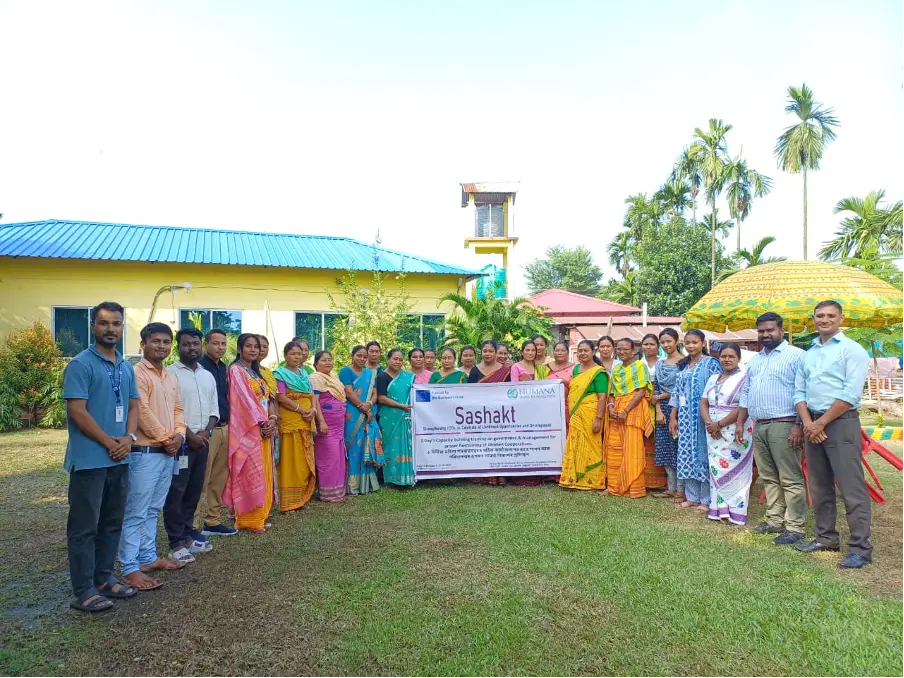
Along with giving support in ventures, assistance with resolving compliance, infrastructure, banking, production, and marketing issues, and creating awareness of beneficial government schemes. Sashakt has focused on building the technical and managerial capabilities of women to make them into business owners and leaders of their own collaborative ventures. For generations, people belonging to the scheduled caste community have had limited opportunities for education, training, and support. Thus, providing them with training on financial literacy, digital skills, and entrepreneurship development has been a major crucial step in the project.
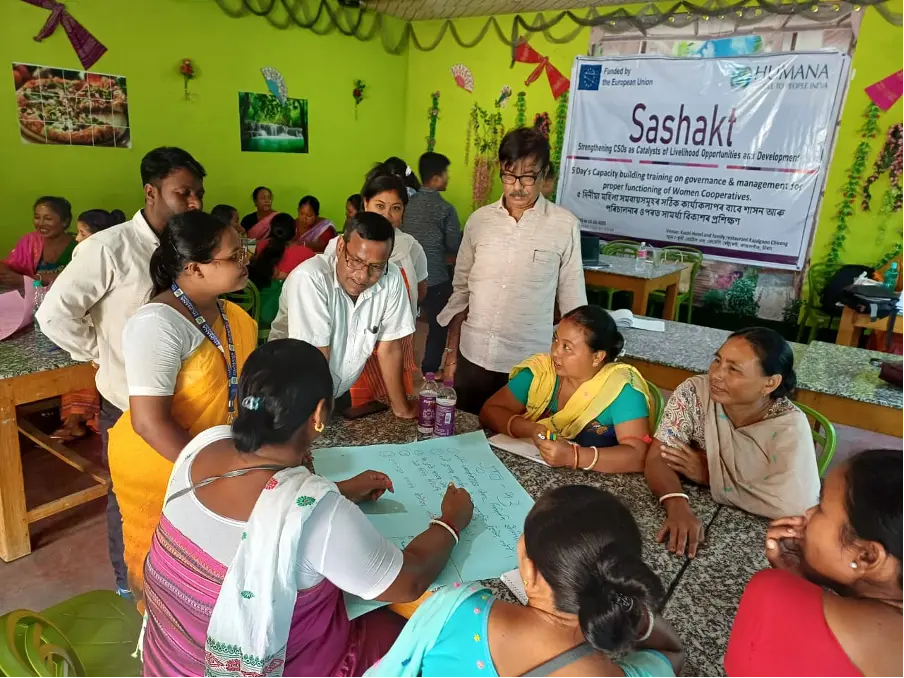
The role of Sashakt is to support, revive, and improve the conditions of struggling cooperatives. Through numerous training sessions the locals enthusiastically comment, they have been taught what it means to be a businesswoman.
During the sessions, the members were trained to identify opportunities, understand their customers, package and price their products, and recognise their strengths. They learnt the ropes of business management from scratch to later navigate markets on their own terms. There emerged an intentionality in using their talent. Through management training they learnt skills like budgeting, documentation and securing their data.
Many women were intimidated of digital platforms, especially the financial transaction sites. But with Sashakt, they learnt the digital skills, opened bank accounts, and got familiar with passbooks, QRs, ATM cards, payment apps and much more.
Stories of how women were sceptical and afraid of using digital platforms but now managing their small earnings independently and with confidence are common after this programme. Many now with assurance express that they don’t feel afraid of digital payments anymore, manage their own bank accounts and do digital transactions independently.
Along with capacity building, Sashakt is working towards establishing direct market linkages with local vendors, institutions such as the Tribal Cooperative Marketing Development Federation of India (TRIFED), online markets, and credit linkages, bringing visibility to the craft and providing a platform for it. Organising a series of exhibitions, market fairs and product sampling events in the districts of operation for showcasing the products. Therefore, achieving promotion of entrepreneurship among women weavers, increasing visibility and awareness for cooperative society of local handloom products and establishing direct-to-consumer market links.
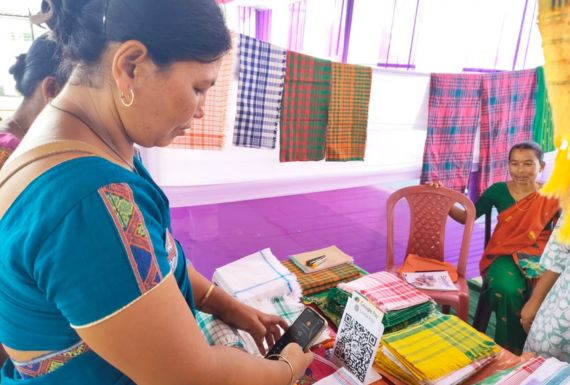
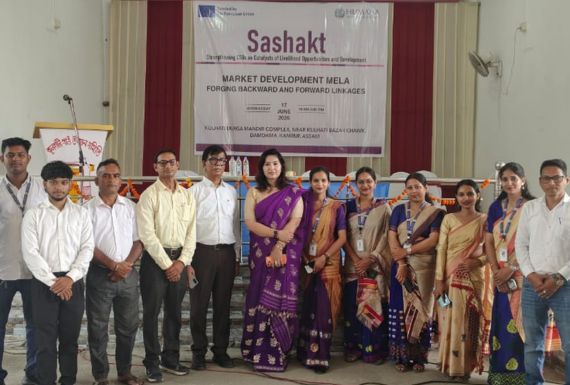
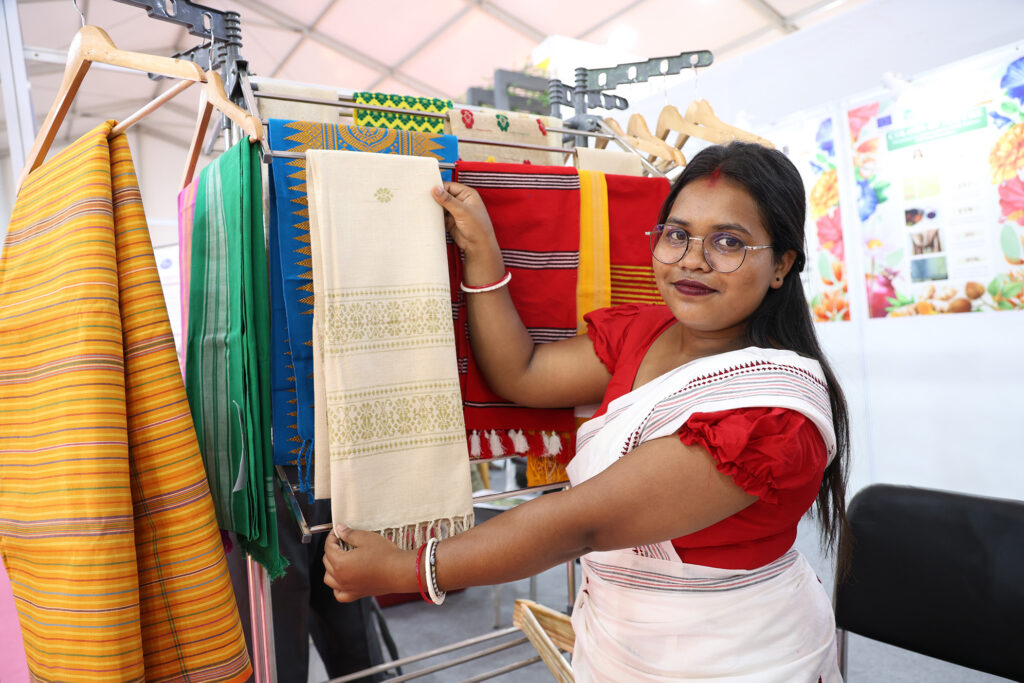
Our recent events under this project involved three Handloom Market Development Melas at Chirang, Kamrup, and Dhubri districts of Assam during June 2026 to create direct market opportunities for women artisans. A total of 25 women-led cooperative societies displayed a diverse range of traditional Assamese handloom products, including Mekhela Chador, Gamocha, Aronai, Dokhona, stoles, scarves, bedsheets, and dress materials, generating sales worth of ₹2,09,090. Besides being a sales generator, it attracted strong consumer interest in locally produced handloom products, promoting the rich Assamese textile heritage. It worked towards creating a collaboration chain between women weavers, government departments, financial institutions, livelihood missions, development partners, and local communities and witnessed partnerships with departments such as Handloom & Textiles, Assam State Rural Livelihoods Mission (ASRLM), banks, Rural Self Employment Training Institutes (RSETI), setting base for future business opportunities, technical support, and better financial and market access.
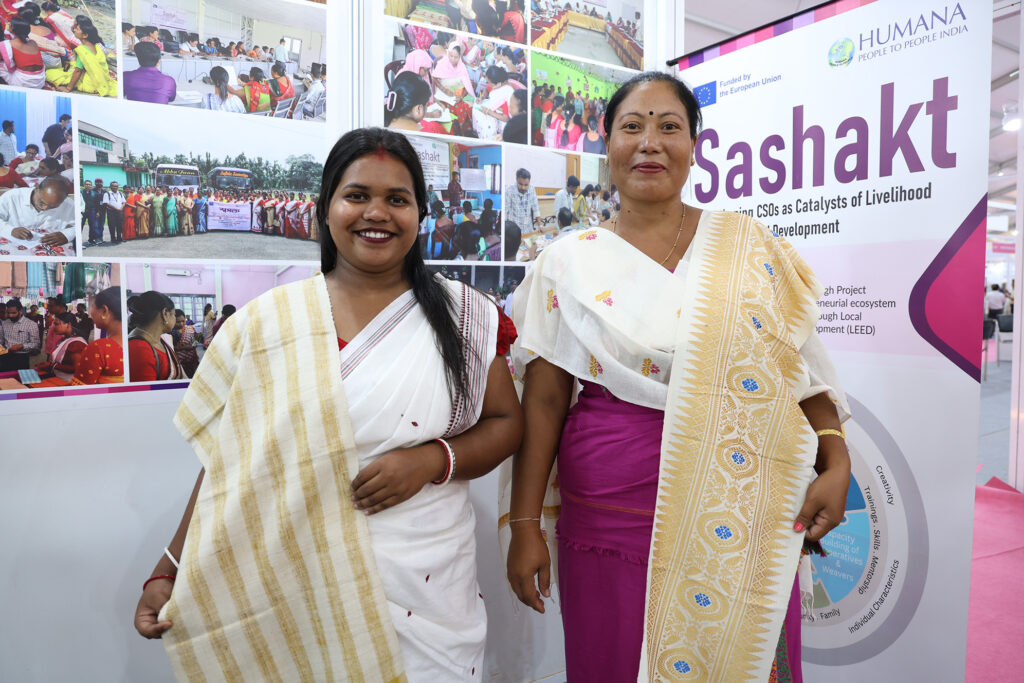
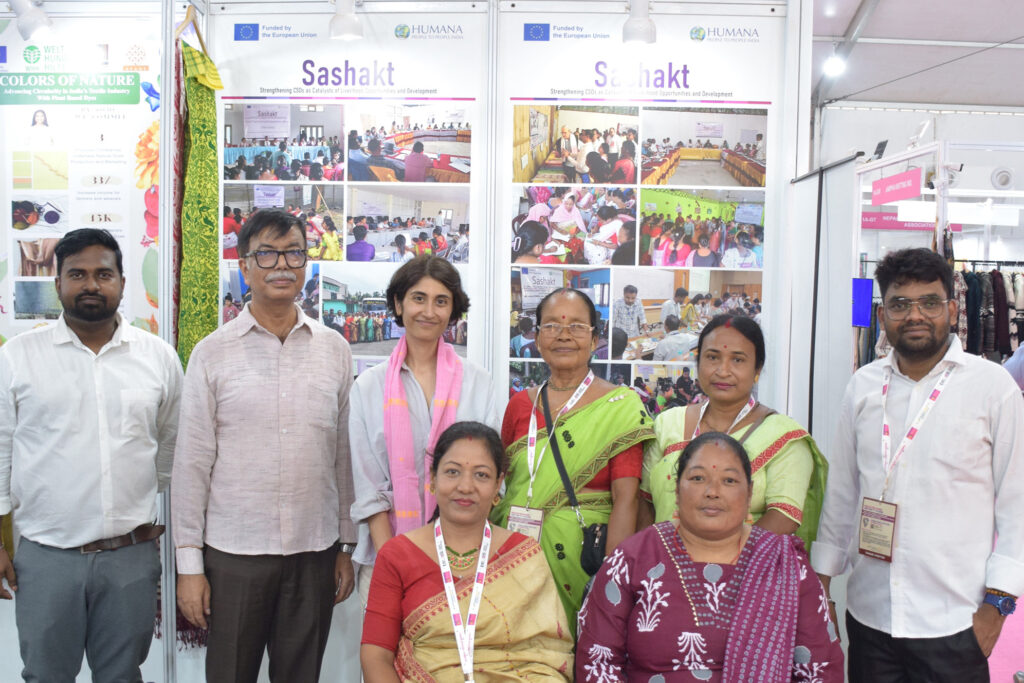
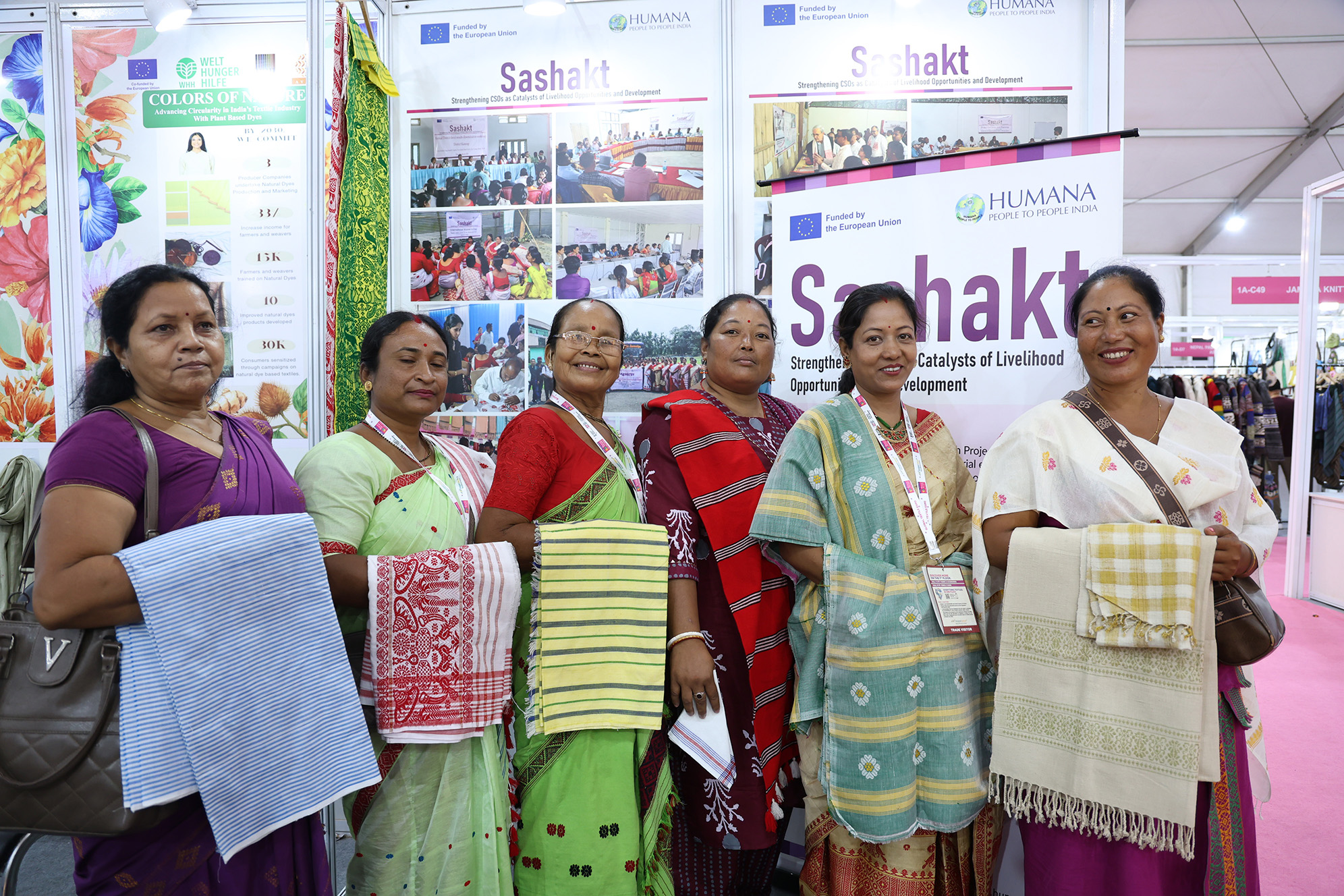
To create more valuable business-to-business (B2B) engagement opportunities, we showcased handloom products crafted by women-led cooperatives in the Bharat Tex 2026, India’s flagship global textile event. This initiative aimed to connect the women cooperatives with potential buyers, explore new markets, and gain insights into emerging industry trends and consumer preferences at a national level. By participating in this platform, they also strengthen their understanding of market dynamics, helping them enhance product quality, competitiveness, and long-term business sustainability.
Women artisans now make their own livelihoods. For them the earned monthly income is a huge leap from their (earlier) conditions of nothing. The livelihood of dignity fills them with pride, independence, and confidence, gaining much more than just financial stability. “It was liberating to see ourselves not just as weavers, but also as artists and entrepreneurs,” a cooperative member said.
Through Sashakt not only the women led ventures in the rural areas will progress. Additionally, an ecologically sustainable, unique, and skin-safe textile craft worth of centuries of history will be preserved and assisted in making it economically relevant for the locals.